




 *This image was generated using AI for illustrative purposes only.
Request Consultation
A Driving Under the Influence (DUI) arrest in Philadelphia is a frightening and overwhelming experience. A single mistake can lead to severe consequences, including the loss of your driver’s license, steep fines, mandatory alcohol education, and even significant jail time. Because Pennsylvania uses a tiered penalty system based on your Blood Alcohol Content (BAC) and prior offenses, the outcome of your case depends heavily on the specific details of your arrest and the quality of your legal defense.
The criminal lawyers at SKA Law Group understand that good people can find themselves in bad situations. We provide professional, authoritative, and empathetic legal representation to help you navigate the complexities of the Pennsylvania DUI system. Whether this is your first offense or you are facing repeat charges, securing competent legal counsel immediately is critical to protecting your freedom, your driving privileges, and your future.
Pennsylvania’s Legal Blood Alcohol Limits and DUI Tiers
In Pennsylvania, it is illegal for general motorists to operate a vehicle with a Blood Alcohol Content (BAC) of 0.08% or higher. However, the legal limit is stricter for certain drivers: 0.04% for commercial vehicle drivers and 0.02% for drivers under the age of 21.
Under Pennsylvania’s DUI legislation, penalties are divided into three distinct tiers based on the driver’s BAC at the time of the offense or within two hours after driving:
General Impairment (0.08% to 0.099% BAC)
This is the lowest tier of DUI. For a first offense, it is typically charged as an ungraded misdemeanor, carrying up to six months of probation, a $300 fine, mandatory alcohol highway safety school, and treatment if ordered by the court. Notably, a first-time General Impairment offense may not result in a license suspension if the driver meets certain criteria.
High BAC (0.10% to 0.159% BAC)
If your BAC falls into this middle tier, the penalties increase significantly. A first offense carries a mandatory 12-month license suspension, 48 hours to six months in jail, and fines ranging from $500 to $5,000, along with mandatory education and treatment.
Highest BAC (0.16% and higher) or Controlled Substances
The strictest penalties apply to drivers with a BAC of 0.16% or higher, drivers under the influence of illegal or prescription drugs, and drivers who refuse chemical testing. A first offense in this tier includes a 12-month license suspension, 72 hours to six months in jail, and fines between $1,000 and $5,000.
Refusing a breath, blood, or urine test violates Pennsylvania’s “Implied Consent” law, resulting in an automatic 12-month license suspension—even if you are never convicted of the DUI itself.
Penalties for Repeat DUI Offenses
Pennsylvania law severely punishes repeat DUI offenders. The “lookback period” for prior offenses is ten years. If you receive a second or third DUI within a ten-year window, the penalties compound drastically.
For example, a second offense in the Highest BAC tier is graded as a first-degree misdemeanor, carrying an 18-month license suspension, a mandatory minimum of 90 days up to five years in prison, fines up to $10,000, and a mandatory one-year installation of an Ignition Interlock Device on your vehicle.
Defending Against a DUI Charge in Philadelphia
A DUI arrest does not automatically mean a conviction. A skilled Philadelphia DUI defense attorney can challenge the prosecution’s evidence on multiple fronts. Common defense strategies include:
Challenging the Stop: Law enforcement must have reasonable suspicion or probable cause to pull you over. If the initial traffic stop was illegal, any evidence gathered afterward—including BAC results—may be suppressed.
Questioning Field Sobriety Tests: Standardized field sobriety tests are highly subjective and can be influenced by uneven road conditions, poor lighting, medical issues, or inappropriate footwear.
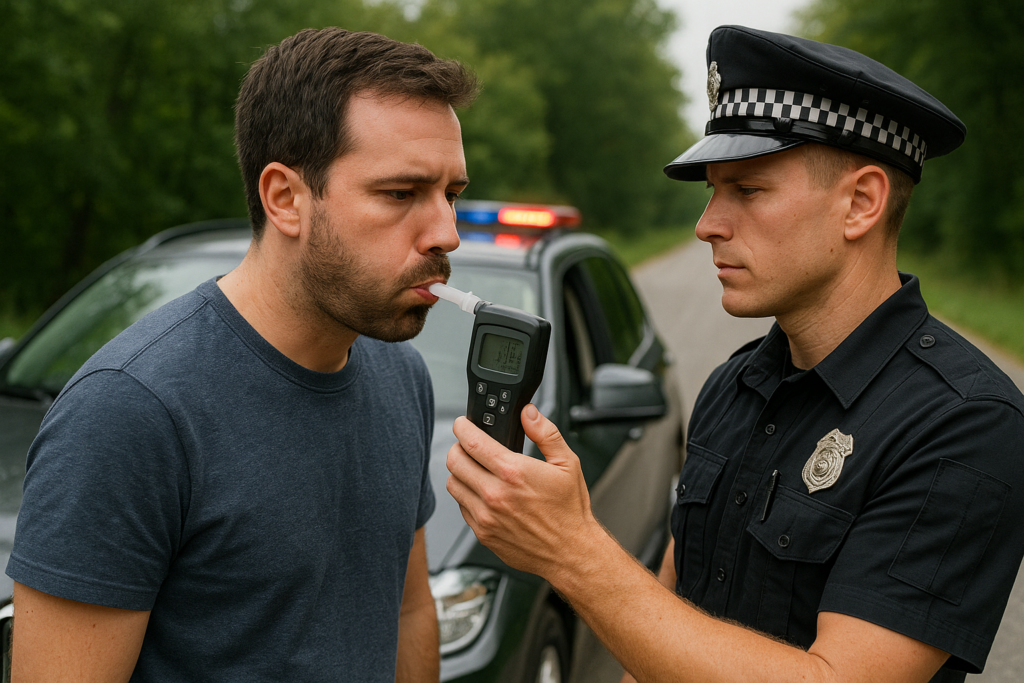
Disputing Chemical Testing Accuracy: Breathalyzers must be properly calibrated and maintained, and blood draws must follow strict chain-of-custody protocols. An attorney can investigate whether the testing equipment or procedures were flawed.
What to Do After a DUI Arrest
The mistakes you make immediately following a DUI arrest can severely impact your case. First, remain polite but exercise your right to remain silent. Do not answer questions about where you were, what you were doing, or how much you had to drink. Second, be aware of the Implied Consent law; refusing a chemical test will result in an automatic license suspension, though you can still challenge the DUI charge itself. Finally, contact an experienced DUI defense attorney as soon as possible to begin building your defense.
Philadelphia DUI – FAQs
Q: What happens when you get a DUI in Philadelphia for the first time?
A: The penalties depend on your BAC. For a General Impairment (lowest tier) first offense, you may face up to six months of probation, a $300 fine, and mandatory alcohol education, often without a license suspension. Higher BAC levels will result in mandatory jail time and a 12-month license suspension. Many first-time offenders may be eligible for the Accelerated Rehabilitative Disposition (ARD) program, which can help you avoid jail time and eventually clear your record.
Q: How long does a DUI stay on your record in Pennsylvania?
A: A DUI conviction stays on your driving record with PennDOT for ten years. However, it will remain on your criminal record permanently unless you successfully complete the ARD program for a first offense and petition for expungement.
Q: Can a DUI charge be dismissed in Pennsylvania?
A: Yes. If your defense attorney can prove that the police lacked probable cause for the traffic stop, improperly administered field sobriety tests, or made errors in chemical testing, the evidence may be suppressed, leading to a reduction or complete dismissal of the charges.
Q: How much does a DUI lawyer cost in Philadelphia?
A: The cost varies based on the complexity of the case, your BAC tier, and whether it is a first or repeat offense. While hiring a private attorney is an investment, it is crucial for protecting your license, avoiding jail time, and mitigating long-term financial and personal consequences.
Q: How does a DUI affect your driver’s license in Pennsylvania?
A: Depending on your BAC tier and prior offenses, a DUI can result in a license suspension ranging from 12 to 18 months. Refusing a chemical test triggers an automatic 12-month suspension. In some cases, you may be eligible for an Occupational Limited License (OLL) with an Ignition Interlock Device to drive to work or school.